
-CURIOSITY HAS NO BORDERS-
Africa / A Travel Journal
Morocco
“From Bustling Souks to Silent Dunes“
September 13-20, 2025
At a Glance
CAPITAL
Rabat
LANGUAGE
Arabic and Amazigh (Berber)
CURRENCY
Moroccan Dirham (MAD)
BEST TIME
March–May and September–November
TIME ZONE
GMT+1 for most of the year
DRIVING SIDE
Right
DAYS STAYED
7 Days
PLACES VISITED
Marrakech, Todra Gorge, Ksar of Ait-Ben-Haddou, Sahara Desert

Navigate This Journey
Jump to any part of this trip
Our Journey
From Marrakech to the Sahara
Our Moroccan experience began almost immediately after we stepped off the plane in Marrakech—and before we had even seen our first souk, camel, or cup of mint tea.
We had the address for our riad, so we assumed getting there would be simple. It was not. Trying to find an Uber, taxi, or really anyone who could get us where we needed to go proved more challenging than almost anywhere else we had traveled. We showed people the address, but no one seemed to know exactly where it was.
Eventually, we called the riad and explained our situation. They arranged for someone to come and get us, which was a huge relief. But once the car stopped, we quickly realized why nobody had been able to take us all the way there—cars weren’t allowed anywhere near where we were staying. And that was when a man with a wheelbarrow appeared, loaded our luggage into it, motioned for us to follow him, and started walking.


Where Curiosity Took Us

Marrakesh
Marrakesh is one of Morocco’s most vibrant and unforgettable cities—a maze of colorful souks, hidden riads, ornate palaces, fragrant spice stalls, and lively streets. At the heart of it all is Jemaa el-Fnaa, where musicians, food vendors, performers, and market stalls bring the square to life. With the Atlas Mountains rising in the distance and centuries of history woven through the medina, Marrakesh feels energetic, chaotic, beautiful, and completely unlike anywhere else.

Ksar of Ait-Ben-Haddou
Ksar of Aït-Ben-Haddou is one of Morocco’s most iconic historic sites, a striking fortified village built from earth and clay along an ancient caravan route between the Sahara and Marrakesh. Its maze of narrow passageways, traditional kasbahs, and dramatic desert setting make it feel almost frozen in time. A UNESCO World Heritage Site, Aït-Ben-Haddou has also served as the backdrop for numerous films and television productions.

Todra Gorge/Green Valley
Todra Gorge is one of Morocco’s most dramatic natural landscapes, where towering red and orange limestone cliffs rise above a narrow river valley near Tinghir. Just beyond the rugged canyon, the scenery transforms into a surprisingly lush green oasis filled with palm groves, gardens, and small Amazigh villages. The contrast between the arid mountains and the vibrant valley below makes this one of the most beautiful drives and stops in southern Morocco.

Sahara Desert
The Sahara Desert is one of Morocco’s most unforgettable landscapes, where enormous golden dunes stretch toward the horizon and the silence feels almost unreal. In southeastern Morocco, places like Merzouga and the Erg Chebbi dunes offer the classic desert experience—camel rides, sweeping sunsets, nights beneath incredibly clear skies, and traditional desert camps. It is a completely different side of Morocco and one that feels both peaceful and otherworldly.
Funny Moments
The Moroccan Interrogation Chamber
Before our trip, we had researched Moroccan hammams and were genuinely excited to try one. We had loved our hammam experience in Turkey, so we went into this feeling pretty confident. We had done this before, we knew the general idea, and we figured we were at least somewhat prepared.
We were not.
The Sahara Night Watch
Our room in the Sahara was actually surprisingly nice and comfortable, which felt like a small luxury after a long day of traveling. There was just one problem: the windows did not have screens.
Normally, that would be easy enough to solve by simply closing them. Unfortunately, it was so unbelievably hot that closing the windows would have turned the room into an oven. So our choices were basically to roast with the windows shut or leave them open and invite whatever happened to be living in the Sahara Desert to come spend the night with us.
A Very Unexpected Desert Detour
One of the biggest parts of our trip—and one of the experiences we had been most excited about—was our three-day trek to the Sahara Desert. But getting there was just as much a part of the experience as the desert itself, and naturally, the drive managed to give us one of our more memorable bathroom stories.
At our first stop, Sarah and I got in line, paid the woman a few cents for some toilet paper, and went in to do our business. Sarah’s experience was completely uneventful, which was apparently all the luck available for the two of us that day.
Thank God I had asked her to stay outside my stall because the lock was broken, because a few minutes later she heard me say, “Oh no. I have a problem.”
Historical Feature
Ibn Battuta: The Moroccan Who Traveled Farther Than Marco Polo
MOROCCO’S GREAT EXPLORER
Long before airplanes, passports, or travel blogs, a young man from Tangier, Morocco, set out for Mecca in 1325. His name was Ibn Battuta, and what began as a pilgrimage became one of the greatest journeys in history.
At just 21 years old, Ibn Battuta left home intending to complete the Hajj. Instead of returning to Morocco, he kept traveling. Over nearly 30 years, he journeyed across North Africa, the Middle East, Persia, Central Asia, India, Southeast Asia, China, and later across the Sahara to West Africa. In an age of camel caravans, wooden ships, and dangerous roads, his travels were extraordinary.
1325 & BEYOND
He served as a judge in some of the places he visited, met rulers and scholars, survived political unrest and difficult voyages, and carefully observed the customs, food, and daily life of the people he encountered. When he finally returned home, his adventures were recorded in a work known as the Rihla — “The Journey.”

WHAT MAKES IT INCREDIBLE
He traveled about 75,000 miles.
His journey lasted nearly 30 years.
He visited more of the medieval world than almost anyone else of his time. His travel account became the famous Rihla. He likely traveled farther than Marco Polo.
Local Food
Food in Morocco felt like part of the experience rather than just something we stopped to eat along the way. We had a lot of tagine, the slow-cooked Moroccan dish prepared in the cone-shaped clay pot you see everywhere. Depending on where we were, it came filled with different combinations of vegetables, spices, dried fruit, olives, or preserved lemon. After a few days, seeing that familiar tagine lid arrive at the table started to feel like a pretty reliable sign that something good was underneath it.
Must Try
- Tagine
- Couscous
- Pastilla
- Harira
- Msemen
- Zaalouk
- Taktouka
- Briouats
- Chebakia
- Moroccan Mint Tea


Through My Lens
The Photo That Tells the Story
Where the Sand Erases Everything
There was something about the Sahara that made everything feel smaller. The dunes stretched endlessly in every direction, shaped by wind and light, with almost nothing to interrupt the view.
Watching the small caravan move across that enormous landscape put the scale of the desert into perspective. The people and camels looked almost insignificant against the mountains of sand, yet there was something peaceful about the slow rhythm of it all. No rushing. No traffic. No noise competing for attention. Just one step at a time across a landscape that has existed long before any of us and will continue changing long after we leave.
What struck me most was the silence. The Sahara wasn’t empty—it felt alive in a completely different way. The wind moved across the dunes, shadows slowly shifted with the sun, and every footprint seemed temporary, knowing the sand would eventually erase it.

Marrakesh


Cats of Marrakesh


Ksar of Ait-Ben-Haddou


Todra Gorge/Green Valley


Sahara Desert


Plan Your Trip
The little things that make traveling a whole lot easier.
🪢 Local Customs & Etiquette

💬 Useful Local Phrases

💰 Money, Payments & Tipping

📅 Climate & Best Time to Visit

✈️ Getting There & Getting Around

🛏️ Where to Stay

🛡️ Health, Safety & Hydration

🔌 Staying Plugged In

🛂 Visa & Entry Requirements

Packing List
Pack smart. Travel lighter. Leave room for the unexpected.
🎒
Essentials
VIEW LIST ↓
- Passport & travel documents
- Comfortable walking shoes
- Lightweight, breathable clothing
- Modest layers for religious sites
- Light jacket or sweater
- Sun hat & sunglasses
- Sunscreen
- Reusable water bottle
- Plug adapter — Type C & E
- Portable charger
- Small daypack or crossbody bag
🧴
Nice to Have
VIEW LIST ↓
- Scarf or shawl
- Packing cubes
- Electrolyte packets
- Hand sanitizer
- Wet wipes or tissues
- Small amount of cash in Moroccan dirhams
- Camera & extra memory cards
- Offline maps
- Travel-size first aid kit
🧥
Seasonal Additions
VIEW LIST ↓
- Spring: Light layers, rain jacket, comfortable hiking shoes
- Summer: Extra sunscreen, breathable clothing, cooling towel, sun hat
- Fall: Light sweater or jacket, layers for cooler evenings
- Winter: Warm jacket, sweater, scarf, warmer sleepwear
- Atlas Mountains: Warm layers, sturdy hiking shoes, wind-resistant jacket
- Sahara Desert: Lightweight daytime clothes, warm layers for night, scarf for sand and wind
- Coastal Areas: Light jacket or windbreaker for breezy evenings
Travel Lessons
❝
One dung beetle can absolutely ruin an entire night’s sleep.”
❝
Always pack feminine products, even when the calendar says you do not need them.”
❝
A relaxing spa day should not require survival instincts.”
❝
Google Translate has seen things.”
❝
Some cultural experiences expand your horizons. Others make you beg for oxygen.”
Our Curiosity Rating
Our completely subjective take on Thailand — based on what we experienced, loved, photographed, ate, survived, and would happily do again.

Culture
★★★★

Wildlife
★★★

Photography
★★★★

Adventure
★★★★

Food
★★★

Would we go back?
★★★★
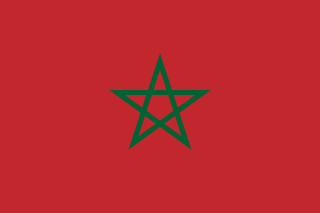
Our Passport Stamps
Every stamp tells a story.









Written by
Ali Kubeck
Curiosity Has No Borders is more than a travel blog—it’s our journey of exploring the world with curiosity, connection, and an open mind. Together, Sarah and I seek authentic experiences, embrace the unexpected, and find meaning in the moments that can’t be planned. We hope our adventures inspire others to step beyond their comfort zones and discover how travel can change the way we see the world.
Enjoyed This? Share It.
If this post inspired you or helped you plan your trip, share it with someone who needs a nudge.
Leave a Comment
We’d love to hear from you — whether you’ve been to this destination, have questions about the trip, or just want to share a thought. Comments are open below.
Leave a Reply